Schema markup is a standardized code vocabulary, maintained by Schema.org, that website owners add to their HTML to help search engines like Google and Bing understand page content more precisely. It’s a form of structured data that translates human-readable content into a format search engine crawlers can interpret with far less ambiguity. For Indianapolis businesses competing in local search, schema markup remains one of the most underused technical SEO practices in 2026.
This guide explains what schema markup is, how it works, and why Indianapolis small businesses, web developers, and SEO consultants treat it as essential rather than optional.
Why Schema Markup Matters for Indianapolis Businesses

Search engine optimization has shifted from keyword density toward semantic SEO: helping search engines understand what a page means, not just which words it contains. Structured data is one of the main tools for making that meaning explicit.
According to Schema.org, more than 45 million web domains use Schema.org markup. Google uses structured data to understand page content and to determine eligibility for rich results, such as review stars, product prices, and event details, which can increase click-through rates. For an Indianapolis web design project competing against dozens of local firms, these enhanced listings can create a visible edge in search results.
Local SEO Indianapolis campaigns also benefit because LocalBusiness schema helps Google confirm your business name, address, phone number, and hours. It supports, but doesn’t replace, your Google Business Profile, which remains the main driver of local pack rankings (the three-business map block that appears for “near me” searches).
Structured data also matters for AI-driven search. Google recommends keeping structured data accurate and consistent with visible page content so its systems, including AI Overviews, can better understand your pages.
Key Characteristics of Schema Markup
-
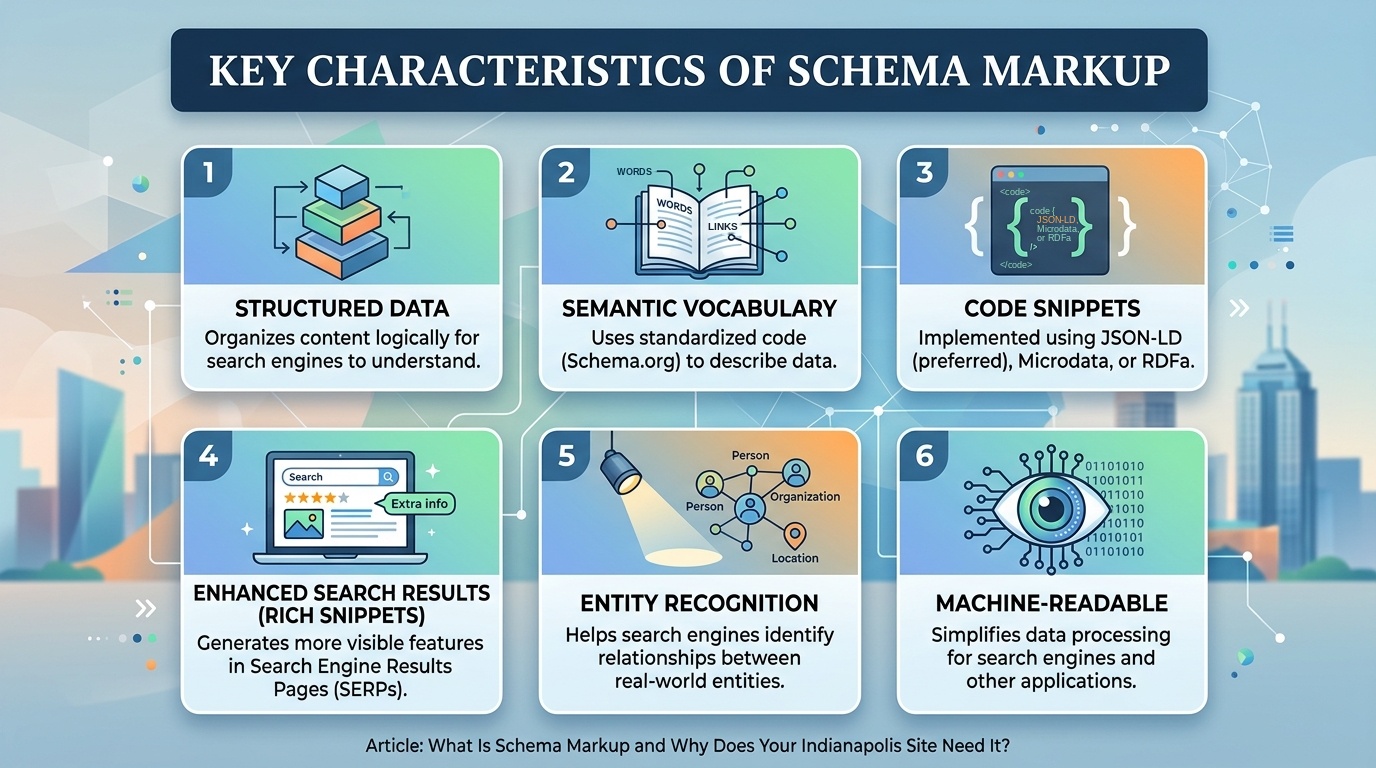
- Standardized vocabulary: Schema.org defines hundreds of types, from LocalBusiness to Product to Event, ensuring consistency across the web.
-
- Machine-readable, invisible to visitors: Structured data lives in the code, not on the visible page, so it doesn’t change your design or user experience.
-
- Multiple formats: Developers can use JSON-LD, Microdata, or RDFa. Google recommends JSON-LD because it’s the easiest to implement and maintain.
-
- Cross-engine support: Google, Bing, and other search engines all read Schema.org markup.
-
- Supports search features: Properly implemented schema can make pages eligible for rich results such as review stars, product details, event listings, and breadcrumbs.
How Schema Markup Works: From Code to Rich Result
Understanding the process makes it easier to add schema markup to your website correctly.
-
- Identify the content type: Determine whether the page represents a LocalBusiness, Article, Product, Event, or another type.
- Write the markup: Using JSON-LD (the preferred format), write a script block with Schema.org properties such as name, address, phone number, and hours.
- Add it to the page: Place the script in the page’s <head> or <body>, often through a content management system like WordPress using a plugin or custom template.
- Search engines read it: Googlebot and Bingbot process the structured data when crawling and indexing the page.
- Validate it: Check your markup with Google’s Rich Results Test for supported rich result types, and the Schema Markup Validator (validator.schema.org) for general Schema.org syntax.
- Display in search results: If the page is eligible, Google may show a rich result, such as review stars, product prices, or event dates.
This process is the foundation of any beginner’s schema implementation plan, and it’s typically reviewed during a technical SEO audit by the SEO agency Indianapolis businesses hire for local visibility work.
Common Misconceptions About Schema Markup
| Myth | Reality |
|---|---|
| Schema markup is a direct Google ranking factor. | Google has said structured data isn’t a direct ranking signal. It helps search engines understand your content and can improve click-through rates through rich results. |
| Adding schema guarantees rich results. | Valid markup makes a page eligible, not guaranteed. Google decides whether to show rich results. |
| Schema markup is only for large companies. | Small businesses benefit too. LocalBusiness schema is easy to add, even for a single-location Indianapolis shop. |
| JSON-LD, Microdata, and RDFa rank differently. | No format ranks better. JSON-LD is simply easier to implement and maintain. |
| Schema markup replaces your Google Business Profile. | They work together. Schema reinforces the same name, address, and phone number (NAP) found in your Google Business Profile and local citations. |
| Schema markup creates featured snippets. | Featured snippets are pulled from your visible page content, not from schema markup. |
Schema Markup vs. Structured Data vs. Rich Results
These terms are often used interchangeably, but each describes a different layer of the same system.
-
- Structured data is the broad concept: information organized in a standardized format so machines can understand it.
-
- Schema markup is structured data written with the Schema.org vocabulary, usually in JSON-LD.
-
- Rich results (formerly called rich snippets) are the visible enhancements, such as star ratings, prices, or event dates, that may appear in Google search results when markup is implemented correctly.
In short: structured data is the concept, schema markup is the method, and rich results are the possible outcome.
Practical Applications for Indianapolis Small Businesses
Best Schema Types for Local Businesses
-
- LocalBusiness schema: Address, hours, phone number, and geo-coordinates to support local search visibility.
-
- Review and AggregateRating schema: Displays star ratings for eligible types like products, recipes, and software. Note: Google doesn’t show star ratings for reviews a business publishes about itself on its own site.
-
- Product schema: Price, availability, and reviews for e-commerce pages.
-
- Event schema: Dates, locations, and ticket details for local events and workshops.
-
- BreadcrumbList schema: Shows your site’s navigation path in search results.
-
- FAQPage schema: Still a valid Schema.org type that can help machines understand Q&A content, but Google no longer shows FAQ rich results in search.
Implementation Checklist
-
- Audit existing pages with the Schema Markup Validator or Google’s Rich Results Test.
- Prioritize your homepage and location pages for LocalBusiness schema.
- Use JSON-LD for new markup and avoid mixing formats on one page.
- Make sure all markup matches the visible content on the page.
- Validate every page before publishing.
- Monitor performance in Google Search Console’s rich result reports.
- Re-audit after major website updates or Google algorithm updates.
Many Indianapolis web design and digital marketing Indianapolis firms bundle schema implementation into broader on-page and local SEO packages. Business owners asking why their Indianapolis website needs schema markup typically see the clearest benefit in local search, where structured data reinforces the same NAP details used in their Google Business Profile and local citations.
For a deeper look at applying schema markup local business strategies, working with an experienced SEO consultant Indianapolis businesses trust can turn technical markup into measurable local search visibility gains.
Frequently Asked Questions
Does schema markup help Google rankings?
Not directly. Schema markup isn’t a ranking factor, but it helps search engines understand your content and makes pages eligible for rich results, which can increase click-through rates and organic traffic.
How do I test schema markup on my site?
Use Google’s Rich Results Test to check eligibility for supported rich results, and the Schema Markup Validator to check general Schema.org syntax and errors.
Can WordPress sites use schema markup easily?
Yes. WordPress SEO plugins can add schema without manual coding, though a web developer should verify the output is accurate and matches the visible page content.
Does Google still show FAQ rich results?
No. Google stopped showing FAQ rich results in search in May 2026. FAQPage schema is still valid, but it no longer produces expandable FAQ dropdowns in Google results.
What is the best schema markup for a local business?
LocalBusiness schema, or a more specific subtype like Dentist, Plumber, or Restaurant, is the most important. It should include your business name, address, phone number, hours, and website, matching your Google Business Profile exactly.
Is JSON-LD better than Microdata for schema markup?
JSON-LD is Google’s recommended format because it sits in a separate script block and is easier to add, update, and troubleshoot. Microdata and RDFa still work, but they’re mixed into your page’s HTML, which makes them harder to maintain.
Let’s get your phone ringing.
Start with a free website review. We’ll show you what’s holding your site back and what we’d fix first.